What are the ingredients in disposable vape juice? This question sounds simple, yet the answer changes across brands, flavors, and manufacturing batches. A responsible review of China’s top ten commonly reported ingredients should begin with labels, laboratory testing, and product documentation, not assumptions.
Most disposable vape liquids contain a carrier base, usually propylene glycol or vegetable glycerin. Nicotine may appear in different forms and concentrations. Flavoring substances create fruit, mint, dessert, or tobacco profiles. Some formulas can also include water, acids, sweeteners, and cooling agents. The exact recipe is not always fully disclosed.
The 2018 National Academies of Sciences, Engineering, and Medicine report examined e-cigarette chemistry and exposure evidence. Its committee, chaired by Dr. David Eaton, concluded that “e-cigarette aerosol is not harmless.” That warning matters. The visible cloud is not simply water vapor.
The U.S. Centers for Disease Control and Prevention also identifies nicotine, flavorings, propylene glycol, vegetable glycerin, and other chemicals in e-cigarette products. However, ingredient presence does not reveal the complete exposure picture. Heating can change chemicals.
Dr. Konstantinos Farsalinos, a physician and e-cigarette researcher, has repeatedly emphasized that “e-cigarettes are not harmless.” His point deserves careful attention, especially when comparing ingredients with inhalation effects.
This guide will examine ten frequently reported ingredients, their functions, and available safety evidence. It will also acknowledge uncertainty. Some labels are incomplete. Some test results vary. That is the uncomfortable part. A precise ingredient list still cannot guarantee a harmless aerosol.
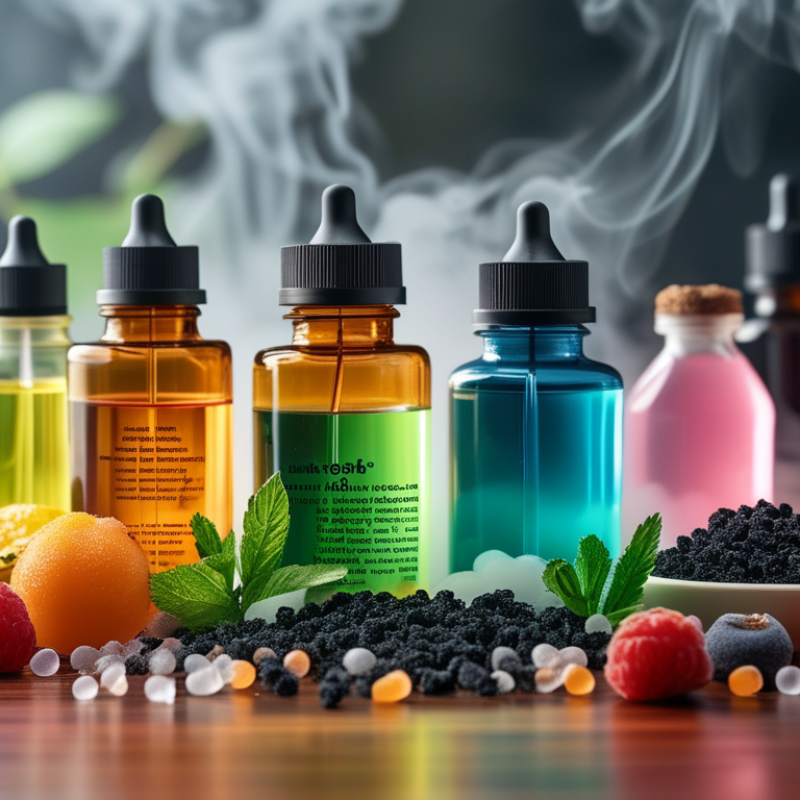
China Top 10 Disposable Vape Juice Ingredients?
GB 41700-2022 changed how China evaluates disposable vape juice ingredients. The standard became effective on October 1, 2022. It limits nicotine concentration to 20 mg/g and requires controlled ingredient use. Common formulation components may include nicotine, propylene glycol, glycerol, water, ethanol, organic acids, and approved flavoring substances. However, these ten categories are not an automatic approval list. Every ingredient needs documentation, testing, and traceable sourcing.
The standard also restricts misleading flavors and prohibits additives that could increase health risks, such as certain stimulants, vitamins, and medicinal substances. Manufacturers must submit product formulas for review through China’s tobacco regulatory system. Packaging, aerosol emissions, leakage resistance, and child safety also matter. Ingredient compliance alone is not enough. The WHO 2023 global tobacco report notes that 88 countries lacked a minimum sales age for e-cigarettes, showing why regulatory checks remain important. Industry reports often estimate rapid growth in vapor products, but market forecasts rarely prove product safety. That distinction is easy to miss.
Tips: Ask suppliers for a current ingredient specification, certificate of analysis, and GB 41700-2022 compliance records. Check nicotine results by batch, not only by formula. Keep flavor descriptions precise. “Fruit taste” may sound harmless, yet it does not replace regulatory evidence. Some practical details remain difficult, especially when flavor blends contain many sub-ingredients.
Propylene glycol, or PG, is a clear liquid that carries flavour efficiently. It usually creates a sharper throat sensation and a lighter vapour. Vegetable glycerin, or VG, is thicker and produces denser clouds with a smoother mouthfeel. The balance between PG and VG changes how the liquid feels, especially during repeated use. A neat ratio can still feel wrong. Personal sensitivity, heating temperature, and device design all affect the experience.
Water may appear in small amounts, but it is not present in every e-liquid base. Purified water can reduce thickness and support smoother movement through certain heating systems. Too much water may create a weak texture, leakage, or an unusually hot sensation. Ingredient quality matters. Manufacturers should verify purity, maintain batch records, and test the finished liquid for consistency. Heating can also change chemical compounds, so a simple ingredient list does not prove complete inhalation safety.
In China’s regulated e-cigarette market, nicotine salts are a controlled active ingredient, not a casual flavor additive. China’s national limit is 20 mg/g for nicotine in e-liquid. This is a mass-based limit, so manufacturers should not confuse it with mg/mL. Nicotine salts usually combine nicotine with an organic acid, creating a less alkaline solution. The throat sensation may feel smoother, but nicotine exposure remains significant. Smooth does not mean harmless.
Reliable production starts with verified raw materials, calibrated scales, and documented mixing records. Each batch should be tested for nicotine concentration, uniformity, impurities, and stability. A supplier certificate is useful, yet it cannot replace independent quality checks. Packaging also needs accurate Chinese labeling, traceable batch information, and secure, compliant containers. Small weighing errors can matter near the legal ceiling. In practical quality work, a clean formula can still fail when records are incomplete.
Formulators should review the latest Chinese standards before release, because requirements and interpretations can change. Testing at one point is not enough; heat, storage time, and repeated sampling may reveal concentration drift. One common assumption deserves reconsideration: a smoother sensation says little about safety. The difficult part is consistency. A product may meet 20 mg/g on paper yet deserve rechecking when laboratory results vary.
Flavorings, cooling agents, sweeteners, acids, and ethanol shape the sensory profile of disposable vape liquids. Flavorings can make aerosol taste like fruit, dessert, or mint. However, food-grade status does not prove inhalation safety. The 2018 National Academies report reviewed more than 800 scientific studies and noted that heating can create new chemicals. That matters because flavor compounds may react differently inside a heated coil.
Cooling agents can create a cold sensation without strong mint flavor. Users may perceive less harshness, even when the aerosol remains irritating. Sweeteners improve taste but can contribute to thermal degradation and residue on the coil. Acidulants adjust pH and may influence nicotine delivery, throat feel, and chemical stability. Small formulation changes can produce different results. Lab testing is essential.
Ethanol may act as a solvent and affect viscosity, evaporation, and aerosol formation. Yet its presence should be controlled and clearly disclosed. The World Health Organization has repeatedly emphasized that emissions depend on liquid composition, device temperature, and operating conditions. A 2020 evidence review from Public Health England also described substantial variation among products and testing methods. This leaves an uncomfortable gap: a tidy ingredient label cannot predict every inhaled compound. Better reporting should include concentrations, impurities, heating conditions, and independent batch results. Not every “smooth” puff is a safer puff.
Ingredient 10: Stabilizers and Labeling Requirements for 2 mL Pods
Stabilizers help maintain liquid consistency, pH, and flavor during storage. Common functions include reducing separation and limiting oxidation. However, “stabilizer” is not a safety guarantee. The National Academies’ 2018 report found that aerosol chemistry changes with liquid composition, heating temperature, and device power. This makes formulation records and batch testing essential.
China’s GB 41700-2022 standard limits an e-cigarette cartridge’s liquid capacity to 2 mL. It also limits nicotine concentration to 20 mg/mL. Labels should clearly show nicotine strength, net liquid content, production date, shelf life, batch details, manufacturer information, and required health warnings. Ingredient descriptions must match the actual formula. Vague wording creates avoidable compliance risks.
A practical quality check starts with a 2 mL fill verification. Operators should inspect viscosity, color, separation, and container leakage after controlled storage. Stabilizers should never conceal degradation. The WHO Study Group on Tobacco Product Regulation has emphasized that product design and chemical emissions require careful assessment. That point deserves attention.
The weak point is often human.
A technically stable liquid can still carry an incomplete label. I would also question whether every “stabilizer” has a clear functional justification, especially when long-term inhalation data remain limited. Production teams should retain supplier specifications, test results, and change-control records for every formulation update.
A 2 mL pod contains approximately 2 mL of e-liquid. Where a 20 mg/mL nicotine limit applies, the calculated maximum nicotine quantity is 40 mg per fully filled pod. Stabilizers and other additives should be identified accurately, supported by safety documentation, and declared according to the applicable market regulations.
Key labeling information commonly required for regulated nicotine products includes the nicotine concentration, ingredient list, batch or lot identification, health warnings, manufacturer or importer details, and child-resistant or tamper-evident packaging information. Regulatory requirements vary by jurisdiction.
It regulates ingredient use, nicotine concentration, packaging, emissions, leakage resistance, and child safety. The standard took effect on October 1, 2022. Ingredient compliance alone is not enough.
The limit is 20 mg/g. Manufacturers should verify nicotine levels for every production batch. A formula document alone may not reflect actual results.
No. These ingredients may appear in e-liquid bases, but approval is not automatic. Each ingredient needs documentation, testing, and traceable sourcing.
Propylene glycol usually creates a sharper throat sensation and lighter vapor. Glycerol is thicker and often produces denser vapor. Device design and personal sensitivity still matter.
Purified water can reduce thickness and support liquid movement through some heating systems. Excess water may cause leakage, weak texture, or unusual heat. Small amounts matter.
Food-grade status does not prove inhalation safety. Heating may create new chemicals from flavor compounds. A familiar fruit or mint description is not safety evidence.
Cooling agents create a cold sensation, while sweeteners improve taste. Acids can affect pH, throat feel, and nicotine delivery. Ethanol may change viscosity and aerosol formation.
Request current ingredient specifications, certificates of analysis, and compliance records. Check nicotine results by batch, not only by formula. Keep precise flavor descriptions and sourcing records.
Not completely. Emissions depend on liquid composition, device temperature, and operating conditions. A tidy label helps, but it cannot answer everything. That gap deserves more attention.
This guide explains what are the ingredients in disposable vape juice and how they are addressed under China’s GB 41700-2022 framework. The e-liquid base commonly contains propylene glycol (PG), vegetable glycerin (VG), and water, which help carry flavor and create vapor. Nicotine salts may also be included, but their concentration must remain within the applicable 20 mg/g limit. Together, these components form the foundation of a compliant formulation.
The remaining ingredients may include approved flavorings, cooling agents, sweeteners, acids, and ethanol, each used in controlled amounts to shape taste, sensation, and consistency. Stabilizers can help maintain product quality during storage. The framework also emphasizes accurate ingredient information, safety warnings, and labeling for products containing pods with a capacity of up to 2 mL. Overall, responsible formulation requires careful ingredient selection, controlled concentrations, transparent labeling, and compliance with applicable standards.
