10 Tips for Traveling With Disposable Vapes on a Plane?

Time:2026-10-10 Author:Oliver
0%

Planning how to travel with disposable vapes on a plane requires more than placing one in a suitcase. Battery safety, airport screening, airline policies, and destination rules all matter. This guide introduces ten practical tips for travelers carrying legally purchased, nicotine-containing disposable vapes. It focuses on preparation, careful packing, and responsible decisions before reaching the airport.

Lisa Farbstein, a Transportation Security Administration spokesperson, states, “Electronic smoking devices are allowed only in carry-on baggage.” That guidance is central to this topic. A disposable vape should never go inside checked luggage. Keep it protected in your carry-on, away from keys, coins, and loose metal objects. Do not use or charge it during the flight. Prevent accidental activation.

Small details help. Check the airline’s current policy before departure. Then review the rules at your destination. Some places restrict possession, importation, or nicotine products, even when departure rules seem simple. A printed policy or official webpage can prevent confusion at the counter.

Rules can change.

This article also considers realistic travel moments, such as a crowded security tray, a leaking device, or an unexpected gate inspection. Not every checklist feels perfect. I might still recheck the rules on departure day, because assumptions create avoidable problems. The goal is not to encourage vaping. It is to explain how to travel with disposable vapes on a plane safely, lawfully, and with respect for other passengers.

10 Tips for Traveling With Disposable Vapes on a Plane?

Check Airline and Destination Rules for Disposable Vapes

Traveling with disposable vapes begins with two rulebooks: your airline’s policy and the destination’s law. The International Air Transport Association (IATA) classifies electronic smoking devices as carry-on items, not checked baggage. The U.S. Federal Aviation Administration also requires protection against accidental activation. Rules can change at connecting airports, too. A device accepted at departure may face restrictions after landing.

Tips: Check the airline website and destination authority before packing. Save screenshots of the relevant rules. Ask customer service when wording seems unclear. Pack the device in your carry-on, preferably in a small protective case. Never place it inside checked luggage. Do not use or charge it during the flight. Airport security staff may apply additional screening procedures.

A 2024 IATA passenger forecast expected about 4.7 billion air journeys worldwide, showing how varied airport procedures can become. That scale makes assumptions risky. Destination regulations may restrict possession, importation, or use, even when airline carriage is permitted. Research the arrival country, transit country, and return route separately. Keep the device away from metal objects and loose batteries. Packaging matters.

Tips: Inspect the device before leaving home. Avoid damaged, leaking, or overheating units. Carry only what the written rules allow. I once treated a transit airport as “just a connection,” but that assumption was weak. A printed policy, recent date, and direct confirmation are safer than airport-counter guesses.

Pack Disposable Vapes Safely in Your Carry-On Baggage

10 Tips for Traveling With Disposable Vapes on a Plane?

Pack Disposable Vapes Safely in Your Carry-On Baggage

Disposable vapes should travel in your carry-on baggage, never in checked luggage. Aviation authorities treat them as battery-powered electronic devices because damaged lithium batteries can overheat. The FAA’s lithium battery incident dashboard recorded 27 fire, smoke, or extreme-heat events in 2024. The number is small, but one battery can still disrupt an entire cabin.

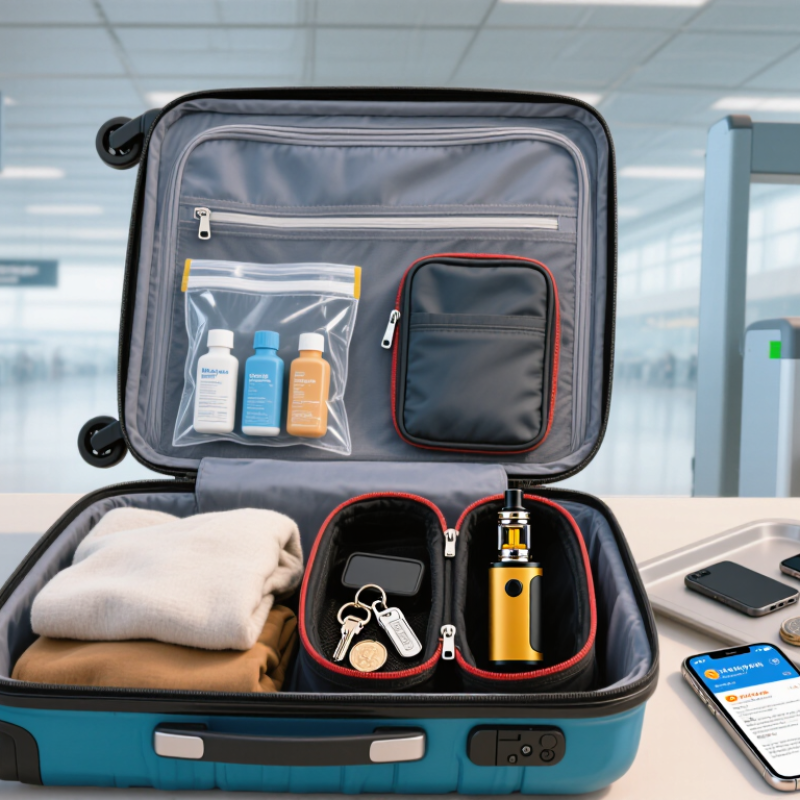
A practical packing routine starts with the device itself. Switch it off, if possible, and place each vape in a separate protective sleeve. Keep it away from coins, keys, and metal charging contacts. A small zip pouch works well. Do not pack loose devices under heavy clothing. Pressure and accidental activation are easy to overlook.

Keep the pouch near the top of your carry-on. Security staff may need to inspect it quickly. Do not use or charge a vape during the flight. Airline rules can be stricter than general aviation guidance, so check the carrier’s current policy before leaving home. IATA’s 2024 Safety Report recorded 40.6 million flights worldwide, showing how many passengers depend on consistent safety habits. Still, guidance is not perfectly uniform. The weak point is human memory. A quick check at the gate can prevent an avoidable problem.

Keep Vapes Protected From Accidental Activation

When traveling with disposable vapes, preventing accidental activation deserves careful attention. A device can activate under pressure, especially inside a crowded pocket or overpacked bag. Keep each vape in a rigid protective case. Choose one that prevents the mouthpiece from being pressed. Avoid loose storage with keys, coins, chargers, or other metal objects.

Keep vapes in your carry-on baggage, never in checked luggage. Aviation safety guidance treats them as battery-powered devices, so airline rules may vary. Check the airline’s current policy before leaving home. Security requirements can also differ between departure and connecting airports. If the package includes a protective cap, keep it fitted during travel. Do not modify the device or insert anything into its opening.

Keep it upright.

A small zippered pouch may help, but it should not squeeze the device. Avoid placing it beneath heavy books or tightly packed clothing. Do not use or charge a vape during the flight. If it becomes hot, leaks, swells, smells unusual, or activates by itself, move away from flammable materials and tell cabin crew immediately. Do not attempt repairs in the aircraft cabin.

In practice, travelers often focus on paperwork and forget pressure damage. I have found that a quick inspection before boarding prevents careless mistakes. Still, protective storage is not a guarantee. Airline staff instructions remain the most reliable source during the journey.

10 Tips for Traveling With Disposable Vapes on a Plane? - Keep Vapes Protected From Accidental Activation

No. Travel Tip Recommended Action Why It Matters Timing Rule Status
1 Pack disposable vapes in carry-on baggage Keep every vape and spare lithium battery with you in the cabin. Do not place them in checked baggage. Portable electronic devices and spare lithium batteries can create a fire risk if damaged or if a battery experiences a short circuit in the aircraft cargo area. Before check-in Generally required
2 Prevent accidental activation Use the original protective packaging or place each device in a separate rigid case. Keep devices away from keys, coins, chargers, and other metal objects. Pressure, loose objects, or a blocked airflow sensor may cause an automatic device to activate and generate heat. Before leaving for the airport Strongly recommended
3 Protect the mouthpiece Cover the mouthpiece with its original cap when available, and store the device upright in a leak-resistant pouch. A cover helps reduce contamination and limits contact with other items. Upright storage can also help reduce leakage. During packing Recommended
4 Do not use or charge the vape on board Do not vape, recharge, dismantle, or attempt to refill the device during the flight. Follow all cabin-crew instructions. Aircraft safety rules generally prohibit smoking and vaping in the cabin. Charging or modifying a lithium-battery device can increase overheating risk. During the flight Required
5 Keep the device accessible Place the protected vape in a small carry-on pouch that can be reached quickly if cabin crew asks you to secure or relocate it. Some airlines require portable electronic smoking devices to remain on the passenger’s person or in an accessible cabin location rather than in an overhead compartment. Boarding and flight Check airline policy
6 Inspect for damage before travel Do not carry a vape that is swollen, cracked, leaking, unusually hot, or producing an odor. Isolate it safely and ask airport or airline staff for guidance. Physical damage can increase the risk of battery failure, leakage, overheating, or fire. Before packing Safety requirement
7 Check security rules for e-liquid If carrying separate e-liquid, place it in a compliant liquids bag and confirm the current liquid-volume limits for the departure airport and connecting airports. Liquid screening limits and procedures may differ by airport, route, and security checkpoint. Before security screening Verify locally
8 Confirm airline and destination restrictions Review the airline’s dangerous-goods policy and the laws of every destination and transit country before departure. Some jurisdictions restrict or prohibit the import, possession, sale, or use of vaping products, even when air-transport rules allow them in carry-on baggage. Before booking and departure Required to verify
9 Carry only a reasonable personal quantity Bring only the amount needed for the trip and keep the devices together in a clearly organized personal-use pouch. Airlines, customs authorities, and destination laws may impose quantity limits or question unusually large amounts. Before packing Limits vary
10 Know what to do if the device activates or overheats Notify cabin crew immediately. Do not place a hot or smoking device back into a bag, and do not handle a damaged battery unnecessarily. Early reporting allows trained crew to follow the aircraft’s fire-safety procedures and reduces the chance of escalation. During the flight Immediate safety action

Important: Airline, airport-security, aviation-authority, customs, and destination-country rules can change. Confirm the latest requirements for every flight segment before traveling. Never carry a damaged or overheating lithium-battery device.

Follow Airport Security Screening Procedures

Traveling with a disposable vape requires careful attention to airport security screening procedures. Rules differ between countries, airports, and airlines, so check official guidance before leaving home. Some destinations prohibit these devices entirely. If possession is permitted, keep the device in your carry-on bag, never in checked luggage, and protect it from accidental activation. A small case can prevent damage, but it should not hide the device from inspectors.

Keep your boarding pass and identification ready at the checkpoint. Place the device where it can be removed quickly if an officer asks. Follow instructions about trays, electronic items, and liquids without argument or delay. Do not use or charge the vape inside the terminal or aircraft. Security staff may request additional screening, and answering clearly is safer than making assumptions. Never attempt to conceal the device.

I have found that rushing creates avoidable mistakes. A quick check of the airline’s current policy can prevent a long conversation at the gate. Still, online information may be incomplete or outdated. Confirm the rules through the airport, airline, and destination authority. If an officer gives different instructions, follow that official direction. It is better to leave the device at home than risk confiscation, missed travel, or a serious misunderstanding.

Handle Vaping Devices During the Flight and After Landing

Traveling with disposable vapes requires more care than simply placing one in a pocket. The FAA’s PackSafe guidance requires electronic vaping devices and spare lithium batteries to remain in carry-on baggage, never checked luggage. IATA’s Dangerous Goods Regulations apply the same safety principle because damaged batteries can overheat during flight. Keep each device switched off and protected from accidental activation. A small case helps. Loose coins do not.

Do not vape, charge, or test the device onboard. Cabin pressure changes are not the only concern; heat and battery damage can create smoke quickly in a confined cabin. Flight attendants are trained to manage battery incidents, but passengers should report swelling, unusual warmth, or a chemical smell immediately. Airline policies can be stricter than general aviation rules, so checking the carrier’s current instructions matters. I sometimes find this step easy to skip, and that is a mistake.

After landing, keep the device away from hot cars, direct sunlight, and children. Never place a disposable vape in ordinary household waste if local guidance provides battery recycling. The U.S. Environmental Protection Agency identifies e-cigarettes as products containing lithium batteries and nicotine, requiring careful handling during disposal. Rules differ by destination, especially for transport, possession, and recycling. Check the airport, airline, and local authority before departure. A sealed pouch is useful, but it does not replace those checks.

FAQS

Can I pack a disposable vape in checked luggage?

No. Carry it in your hand luggage. Battery damage can create heat, smoke, or fire.

Where should I store the device during travel?

Place it in a rigid protective case or small pouch. Keep it near the top of your bag. Keep it upright.

How can I prevent accidental activation?

Keep the mouthpiece covered, if possible. Separate it from coins, keys, chargers, and other metal objects. Do not pack it tightly.

May I use or charge it during the flight?

No. Do not use or charge it onboard. Follow the cabin crew’s instructions at all times.

Should I check the destination’s rules?

Yes. Airline approval does not guarantee permission after arrival. Check the departure, transit, arrival, and return locations separately.

Can rules change at a connecting airport?

Yes. A transit airport may apply different screening or possession rules. I once treated a connection as irrelevant. That assumption was weak.

What should I do before packing the device?

Inspect it carefully. Do not travel with a leaking, swollen, damaged, unusually hot, or overheating device.

What should I do if the device becomes hot or activates by itself?

Move away from flammable materials and notify cabin crew immediately. Do not repair it onboard. Safety comes first.

Should I save proof of the current rules?

Save screenshots or printed guidance with recent dates. Contact customer service when the wording seems unclear. Guessing at the airport is risky.

Conclusion

Traveling with disposable vapes on a plane requires careful preparation and attention to current airline, airport, and destination regulations. Before leaving, confirm whether disposable vapes are permitted at every stage of your journey, including layovers and arrival. The keyword “how to travel with disposable vapes on a plane” starts with one essential rule: keep permitted devices in your carry-on baggage, never in checked luggage. Store them securely in a protective case, separate from loose metal objects, and make sure they cannot be accidentally activated or damaged.

During airport screening, follow staff instructions and present the devices if requested. Do not use or charge them on the aircraft, and keep them safely stored throughout the flight. After landing, continue following local rules, including restrictions on possession, use, disposal, and transportation. If regulations are unclear or the devices are not allowed, leave them at home and choose a compliant alternative.

Oliver

Oliver

Oliver is a seasoned marketing professional with a wealth of expertise in driving brand awareness and engagement. With a deep understanding of our company's product offerings, he consistently delivers high-quality content that enriches our professional blog. His insights not only shed light on......