Understanding what does 5% nicotine mean in a vape starts with reading the label carefully. In many products, 5% means nicotine makes up about 5% of the e-liquid by volume. This commonly equals approximately 50 milligrams per milliliter. However, labeling practices can differ between products and regions. Always check the package, manufacturer information, and health warnings.
The number can feel surprisingly abstract. Imagine a small 2-milliliter pod marked 5%. It may contain about 100 milligrams of nicotine in the liquid. That does not mean the body absorbs all 100 milligrams. Absorption depends on the device, puff length, frequency, nicotine formulation, and individual habits. Nicotine salts may also feel smoother, making stronger products easier to inhale. That smooth feeling can hide the product’s strength.
This explanation has limits. A percentage alone cannot predict personal exposure precisely. A person taking short, occasional puffs may absorb less than someone vaping repeatedly throughout the day. Yet both users may hold the same device. This is where many online explanations become too simple. The safest interpretation is practical: 5% represents a high nicotine concentration, not a harmless flavor level. New users, young people, pregnant individuals, and anyone sensitive to nicotine should avoid nicotine products and seek qualified medical advice. Symptoms such as nausea, dizziness, headache, shaking, or a racing heartbeat require stopping use and obtaining medical guidance. Reliable decisions depend on the complete label, verified product information, and honest attention to how the body responds.
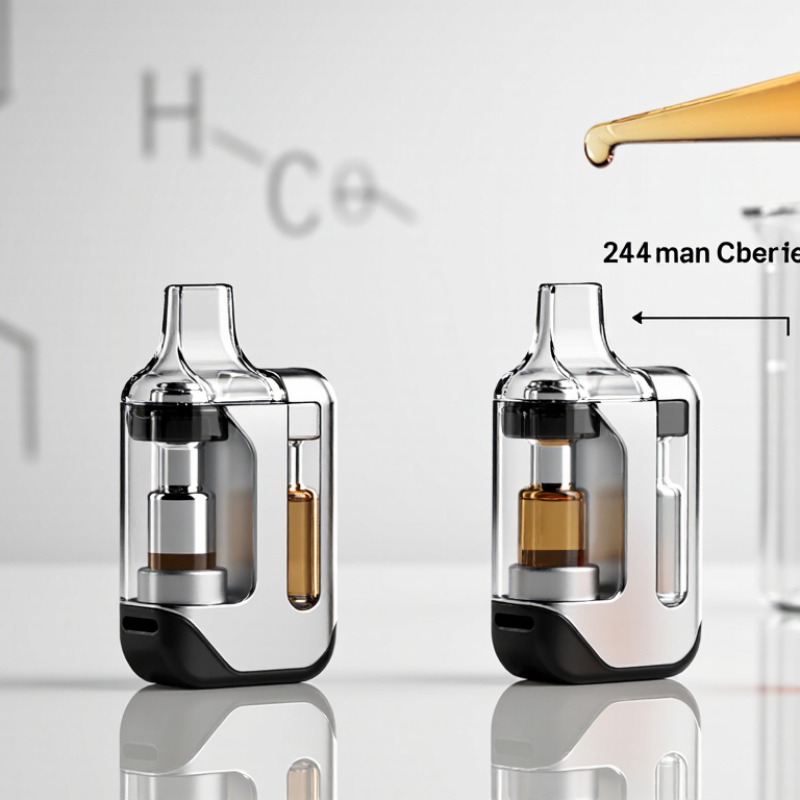
“5% nicotine” usually means 5 grams of nicotine in 100 milliliters of e-liquid. Converting units gives 50 milligrams per milliliter (mg/mL). A 2 mL cartridge therefore contains about 100 mg of nicotine in its liquid, not necessarily the amount absorbed by the user. This distinction matters. Device power, puff duration, airflow, and individual behavior can change nicotine delivery. The National Academies’ report on e-cigarettes also identifies these factors as major influences on exposure.
The percentage label may look simple, but it can cause confusion. Some products use weight-based labeling, while others use volume-based labeling. In common retail labeling, 5% is generally treated as 50 mg/mL. Still, check the container carefully. Labelling practices are not perfectly uniform. The U.S. Centers for Disease Control and Prevention reported that 2.13 million middle and high school students used e-cigarettes in 2023, showing why clear nicotine information remains important.
Tips: Multiply the liquid volume by 50 to estimate the nicotine content in milligrams. For example, 1.5 mL × 50 mg/mL equals 75 mg in the liquid. Do not treat that number as an absorbed dose. Keep nicotine products away from children and pets, and avoid skin contact with the liquid. A calculator helps. Guessing does not.
How to Understand What 5% Nicotine Means in a Vape?
A 5% nicotine label usually represents about 50 mg of nicotine per millilitre of liquid. It does not mean your body absorbs 5% from every puff. Absorption depends on the device, puff length, airflow, and personal experience. The National Academies reported that nicotine delivery varies substantially across products and users. The label is only one part of the picture.
Nicotine salts and freebase nicotine can feel very different at the same stated strength. Freebase nicotine has a higher pH, which may create a sharper throat sensation. Nicotine salts use an added organic acid, reducing that harsh feeling. The result can feel smoother and easier to inhale. Too smooth, perhaps. A 2021 study in Nicotine & Tobacco Research found that salt-based liquids produced higher nicotine intake and smoother ratings than comparable freebase liquids. That difference may explain why 5% can feel unexpectedly strong.
The 2022 Office for Health Improvement and Disparities evidence review also noted that nicotine exposure changes with puffing behaviour and device design. A longer inhale can deliver more nicotine. Repeated puffs can build exposure quickly. People often compare percentages as if they were identical measurements, but they are not perfectly comparable. Formulation, temperature, and inhalation habits matter. If dizziness, nausea, headache, or a racing heartbeat appears, stop using the product and seek medical advice.
Nicotine salts vs. freebase: why the same labeled strength can feel different
How to Understand What 5% Nicotine Means in a Vape?
A 5% nicotine label commonly means 50 mg/mL of nicotine liquid. The calculation is simple: pod volume multiplied by concentration equals total nicotine content. A 2 mL pod contains 100 mg. A 1.5 mL pod contains 75 mg. A 0.7 mL pod contains 35 mg. Even a compact 0.5 mL pod contains 25 mg.
That number describes the liquid, not the amount absorbed by the user. Heating temperature, puff length, device power, and individual habits change nicotine delivery. The National Academies report, Public Health Consequences of E-Cigarettes, notes that device design and user behavior strongly influence exposure. The report also explains that nicotine delivery can vary widely between products and users.
I once treated 50 mg/mL as a fixed dose. That was too neat. It measures concentration, not personal intake. A 2 mL pod may hold 100 mg, but the body will not necessarily absorb all 100 mg. Some liquid remains, and aerosol losses occur. The U.S. Centers for Disease Control and Prevention identifies nicotine as highly addictive and emphasizes that exposure depends on use patterns. Check both numbers: 50 mg/mL and the pod’s actual capacity. A small label can hide a large total.
A 5% nicotine label usually means about 50 mg/mL of nicotine in the e-liquid. This assumes the percentage uses a weight-volume convention, which is common but not universal. Always check the product’s technical label. By comparison, the European Union’s Tobacco Products Directive limits nicotine liquid in consumer refill containers to 20 mg/mL. That equals approximately 2%. Therefore, a 5% formulation contains about 2.5 times more nicotine per millilitre than the EU limit.
The difference becomes clearer with a small pod. Two millilitres of 5% liquid contain roughly 100 mg of nicotine in the liquid itself. That does not mean the body absorbs all 100 mg. Absorption depends on device power, puff duration, liquid composition, and individual behaviour.
The National Academies’ 2018 report found that nicotine delivery from electronic cigarettes varies widely across products and users. Real-world exposure is complicated.
The EU limit was designed around product safety and consumer regulation, not a promise of zero risk. The European Commission’s Directive 2014/40/EU sets the 20 mg/mL ceiling and requires child-resistant packaging. OHID’s 2022 evidence review also reported that nicotine delivery differs between devices, especially as users gain experience. Labels can still confuse people. I initially viewed “5%” as a simple strength label, but the unit conversion matters more than the bold number. A careful reader should compare mg/mL, tank volume, and usage pattern together.
A 5% nicotine label usually means 50 milligrams of nicotine per milliliter of liquid. A 2 mL cartridge could therefore contain about 100 milligrams before vaping. That is the liquid amount, not the amount your body absorbs. Much remains in the device or aerosol.
Puff count gives only a rough estimate. A 200-puff label may assume short, controlled draws. Real use changes with puff length, airflow, coil temperature, and battery power. A three-second puff can deliver more aerosol than a one-second puff. The National Academies’ 2018 report found that electronic nicotine delivery varies widely across devices and users. CORESTA testing guidance also emphasizes controlled puff volume, duration, and intervals. Real hands are less consistent.
Absorption is the difficult part.
Studies reviewed by the National Academies report nicotine delivery ranging from low levels to cigarette-like exposure, especially among experienced users. A practical estimate is:
The fraction is uncertain. It may change with inhalation depth and repeated puffs. Do not treat the label as a personal dose meter. My own rough calculation would start with milliliters consumed, not puff count, then compare sessions under similar settings. Still, it can be wrong. Device power may quietly change the result.
It usually means about 50 milligrams of nicotine per millilitre of liquid. That is liquid concentration, not absorbed dose.
Multiply the liquid volume by its concentration. A 2 mL pod at 50 mg/mL contains about 100 mg in the liquid. The body will not absorb all of it.
No. Absorption depends on puff length, airflow, device power, and personal habits. Some liquid remains behind. Aerosol losses also occur. The label is not a personal dose meter.
Freebase nicotine can create a sharper throat sensation because of its higher pH. Nicotine salts use an added organic acid and may feel smoother. Smoother can make repeated inhalation easier.
Salt-based liquids may deliver more nicotine while feeling less harsh. Longer inhales and repeated puffs can raise exposure quickly. Too smooth, perhaps.
Not reliably. A puff-count estimate may assume short, controlled draws. Real puffs vary in length, airflow, temperature, and power. A three-second puff can produce more aerosol than a one-second puff.
Start with liquid consumed, not puff count. Use this rough formula: liquid consumed × concentration × absorption fraction. The absorption fraction remains uncertain. My estimate could still be wrong.
Stop if dizziness, nausea, headache, or a racing heartbeat appears. Seek medical advice if symptoms continue or feel serious. Do not assume the calculation explains everything.
What does 5% nicotine mean in a vape? It generally means the e-liquid contains approximately 50 mg of nicotine per milliliter, since 5% is commonly converted to 50 mg/mL. The total nicotine in a pod or tank depends on its liquid capacity: for example, a 2 mL pod at this concentration contains about 100 mg of nicotine in the liquid. Nicotine salts and freebase nicotine can feel different because their formulation affects throat sensation, smoothness, and how comfortably higher concentrations can be used.
A 5% concentration is also considerably stronger than the 20 mg/mL maximum commonly associated with the EU TPD framework. However, the amount a person actually absorbs cannot be determined by concentration alone. Puff duration, inhalation style, device power, liquid consumption, and individual use patterns all influence exposure. Puff counts can provide only rough estimates, so users should check product information, follow applicable regulations, and handle nicotine-containing liquids carefully.
