A cough can start with a single puff, a dry tickle in the throat, or a tight feeling in the chest. If you are asking “why do disposable vapes make me cough,” the answer may involve several factors, not one simple cause. The aerosol can irritate sensitive airways, while nicotine, flavorings, and other ingredients may affect people differently. A quick, deep inhale can also feel harsher than a gentle breath. Small details count.
The timing matters. A cough that begins during use may suggest irritation, but it does not prove the vape is the cause. Asthma, a respiratory infection, allergies, and other conditions can produce similar symptoms. Device contents and aerosol exposure may vary, so a label cannot explain every reaction. That is not the whole story. I have to leave room for uncertainty here; symptoms alone cannot identify the cause.
This guide explores common reasons disposable vapes may trigger coughing, what patterns to notice, and when to seek medical advice. Pay attention to whether coughing happens immediately, returns later, or comes with wheezing or breathlessness. If symptoms are severe, persistent, or worsening, contact a healthcare professional. Seek urgent care for serious breathing difficulty or chest pain. You do not need to keep testing a suspected trigger. A clinician can consider your symptoms and health history, rather than guessing from one cough.
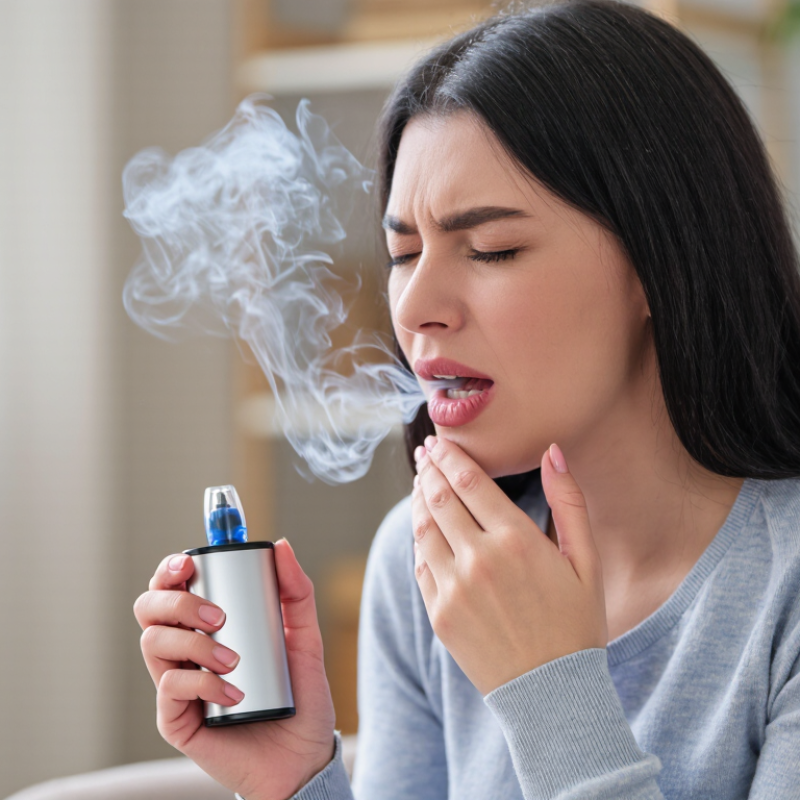
How Disposable Vapes Deliver Aerosol to the Airways
How to Understand Why Disposable Vapes Make You Cough?
A disposable vape heats liquid into an aerosol, not harmless water vapor. When someone inhales, the aerosol travels through the mouthpiece, past the throat, and into the airways. Some droplets settle in the mouth and upper airway; smaller droplets may travel farther into the lungs. How much reaches each area depends on the device, the aerosol, and the person’s breathing pattern. The airway lining senses irritation and can trigger a cough to clear it. That explanation is incomplete, though: ingredients, heat, and inhalation habits can all contribute.
Tips: Notice when coughing starts and whether it follows a deep or repeated puff. Pause and breathe normally. Don’t assume a different flavor will solve the problem; several factors may be involved.
A dry, scratchy throat may reflect irritation near the upper airway, while chest tightness or persistent coughing deserves more attention. People can react differently to substances such as nicotine or aerosol ingredients, and symptoms alone cannot identify the cause. It is easy to blame one ingredient, but that may be too neat an answer. If coughing continues after stopping, worsens, or comes with breathing difficulty, seek advice from a qualified health professional.
How to Understand Why Disposable Vapes Make You Cough? – How Disposable Vapes Deliver Aerosol to the Airways
| Dimension |
What Happens |
How It May Relate to Cough |
Important Context |
| Aerosol formation |
A battery-powered heating element warms e-liquid and produces an inhalable aerosol made of tiny droplets and other substances. |
The aerosol can irritate sensitive tissues in the mouth, throat, and airways, potentially triggering the cough reflex. |
It is not simply water vapour. Its composition varies with the liquid, device, and way it is used. |
| Route to the airways |
During inhalation, aerosol passes through the mouth or nose, then the throat and larger airways; some particles can travel deeper into the lungs. |
Contact with airway surfaces may stimulate sensory nerves and provoke coughing, especially during or shortly after inhalation. |
Where particles deposit depends on factors such as particle size, breathing pattern, and airway anatomy. |
| Propylene glycol and glycerol |
These common e-liquid ingredients help create the aerosol when heated. |
The aerosol may feel dry or irritating to some people and can contribute to throat or airway discomfort. |
Responses differ between individuals; ingredient proportions and exposure are not the same across products. |
| Nicotine |
Some disposable vapes contain nicotine, often in a nicotine-salt formulation; nicotine content varies by product and jurisdiction. |
Inhaled nicotine-containing aerosol may contribute to throat irritation or an unpleasant inhalation sensation in some users. |
A cough cannot be used to determine how much nicotine a person has inhaled. |
| Flavourings and heating products |
Flavour chemicals and substances formed during heating may be present in the aerosol; the substances and levels can vary. |
Some inhaled substances can irritate airways. A flavour that seems mild does not necessarily mean the aerosol is harmless. |
Effects depend on the specific ingredients, device conditions, and exposure; flavour alone does not predict irritation. |
| Puffing pattern and device output |
Puff duration, inhalation depth, frequency of use, and device performance can affect the amount and characteristics of aerosol inhaled. |
Larger or repeated inhalations may increase airway exposure and can make irritation or coughing more noticeable for some people. |
There is no single cough response or exposure level that applies to everyone or to every disposable vape. |
| Individual sensitivity |
Airway sensitivity can differ, and conditions such as asthma or a respiratory infection may affect how someone responds to inhaled irritants. |
A person with sensitive or already irritated airways may cough more readily. |
A new, persistent, or worsening cough should not automatically be attributed to vaping alone. |
| When to seek medical advice |
Cough may have many causes, and symptoms can require assessment by a healthcare professional. |
Seek prompt medical care for breathing difficulty, chest pain, coughing up blood, or severe or rapidly worsening symptoms. |
Stopping exposure is a sensible precaution if vaping triggers symptoms; a clinician can advise on persistent symptoms. |
General educational information. Aerosol composition and individual responses vary; this table is not a diagnosis or a product-specific measurement.
How Vape Ingredients and Heating Can Trigger Cough
A disposable vape’s aerosol is not just water vapor. It may contain propylene glycol, glycerin, flavoring chemicals, and compounds formed during heating. Propylene glycol can feel drying or irritating in the throat, while some heated ingredients may add further irritation. Small details matter. The National Academies’ 2018 review reported that e-cigarette aerosols can contain carbonyl compounds, including formaldehyde, and that emissions vary with device conditions.
Heat can change the mixture. In a 2014 laboratory study, Kosmider and colleagues found formaldehyde emissions rose roughly 4- to 200-fold when tested voltage increased from 3.3 to 5.0 volts; the change depended on the liquid. That result does not prove a particular puff will cause coughing, and the study did not test every disposable device. Still, hotter coils and repeated, rapid puffs may expose the throat to more irritating aerosol.
A scratchy throat after vaping is a useful signal, not a diagnosis. If coughing persists, worsens, or comes with breathing difficulty, stop using the device and seek medical advice.
How Inhalation Habits and Device Settings Affect Throat Irritation
A cough after using a disposable vape can come from aerosol irritating the throat, not just from “harsh” flavor. The National Academies’ 2018 report reviewed more than 800 studies and found conclusive evidence that e-cigarette use can cause throat irritation and coughing. That finding does not explain every cough. Dry air, asthma, or an infection may also be involved.
Puffing deeply, inhaling quickly, or taking repeated draws can leave the throat feeling dry and scratchy. On devices with adjustable power, higher settings may make aerosol warmer and harsher; disposable models may offer little or no adjustment. Some people are also sensitive to aerosol ingredients, including propylene glycol. I may be oversimplifying: irritation varies from person to person, and coughing alone cannot identify its cause.
Tips: Try spacing out puffs and avoid deep, rapid inhalation. If the device has adjustable settings, follow its instructions and avoid increasing power when the vapor feels hot. Stop using it if coughing persists; seek medical advice for ongoing cough, wheezing, or shortness of breath. A cough is a signal, not a diagnosis.
Why Disposable Vapes May Make You Cough
Nicotine can irritate the throat, but this chart shows liquid concentration—not cough rates or a guaranteed cause of coughing. EU and UK rules cap nicotine concentration in e-liquid at 20 mg/mL; nicotine-free liquid contains 0 mg/mL. Deep, rapid, or frequent puffs can increase aerosol exposure and may worsen irritation. Disposable devices often offer few adjustable settings, and coughing can also be caused by other aerosol ingredients or individual sensitivity.
Source: EU Tobacco Products Directive 2014/40/EU, Article 20. The 20 mg/mL value is a regulatory maximum, not a typical product measurement.
How Individual Sensitivities and Respiratory Conditions Play a Role
A cough after using a disposable vape can reflect personal airway sensitivity, not just the amount inhaled. Aerosol droplets and substances such as propylene glycol may irritate the throat and airways. Some people notice a dry tickle; others develop chest tightness or wheezing. The reaction can vary with inhalation depth, recent illness, allergies, and the product’s ingredients.
Small differences matter.
Existing respiratory conditions can make airways more reactive. The CDC’s 2022 National Health Interview Survey estimated that 8.0% of U.S. adults had current asthma. For people with asthma, even mild irritation may trigger coughing or wheezing. A 2018 National Academies review found moderate evidence linking e-cigarette use with increased cough and wheeze among adolescents; that finding does not predict every person’s response. Symptoms that persist after stopping exposure, worsen, or come with difficulty breathing deserve medical attention. Don’t dismiss repeated coughing as “just sensitivity.”
When Vape-Related Cough May Need Medical Attention
A cough after vaping can come from airway irritation, but symptoms alone cannot reveal the cause. Pay attention to when it starts, how often it happens, and whether it continues after you stop. A dry throat may settle, but a worsening cough deserves attention. If you have asthma or heart or lung disease, contact a clinician early.
Seek medical advice if coughing lasts several days, keeps returning, or disrupts sleep or ordinary activity. Arrange prompt care for wheezing, fever, chest discomfort, or increasing shortness of breath. Get emergency help for severe breathing difficulty, blue lips, fainting, or coughing up blood. Do not wait. These signs do not prove vaping caused the problem, but they need assessment.
Tips: Stop vaping while symptoms are present, and avoid smoke, aerosols, and strong fragrances. Drink water, note when symptoms occur, and tell a clinician what you used and when. If symptoms worsen, seek care sooner. Small details can help.
Conclusion
Disposable vapes produce an aerosol that travels through the mouth and throat into the airways, where it may irritate sensitive tissues and prompt coughing. If you’re wondering “why do disposable vapes make me cough,” possible reasons include ingredients that dry or irritate the throat, as well as heating that can create harsh or irritating aerosol. The amount inhaled, the depth and frequency of puffs, and a device’s settings may also affect how strongly the throat and airways react.
People differ in their sensitivity to aerosol ingredients, and coughing may be more likely for those with asthma or other respiratory conditions. A cough can be a sign that the airways are irritated; continuing exposure may worsen discomfort. Seek medical advice if coughing persists, becomes severe, or occurs with shortness of breath, chest pain, wheezing, or other concerning symptoms. Only a health professional can assess the cause and recommend appropriate care.

 VEXEL Vape